
Wawu Mountain, Sichuan, 2021/05
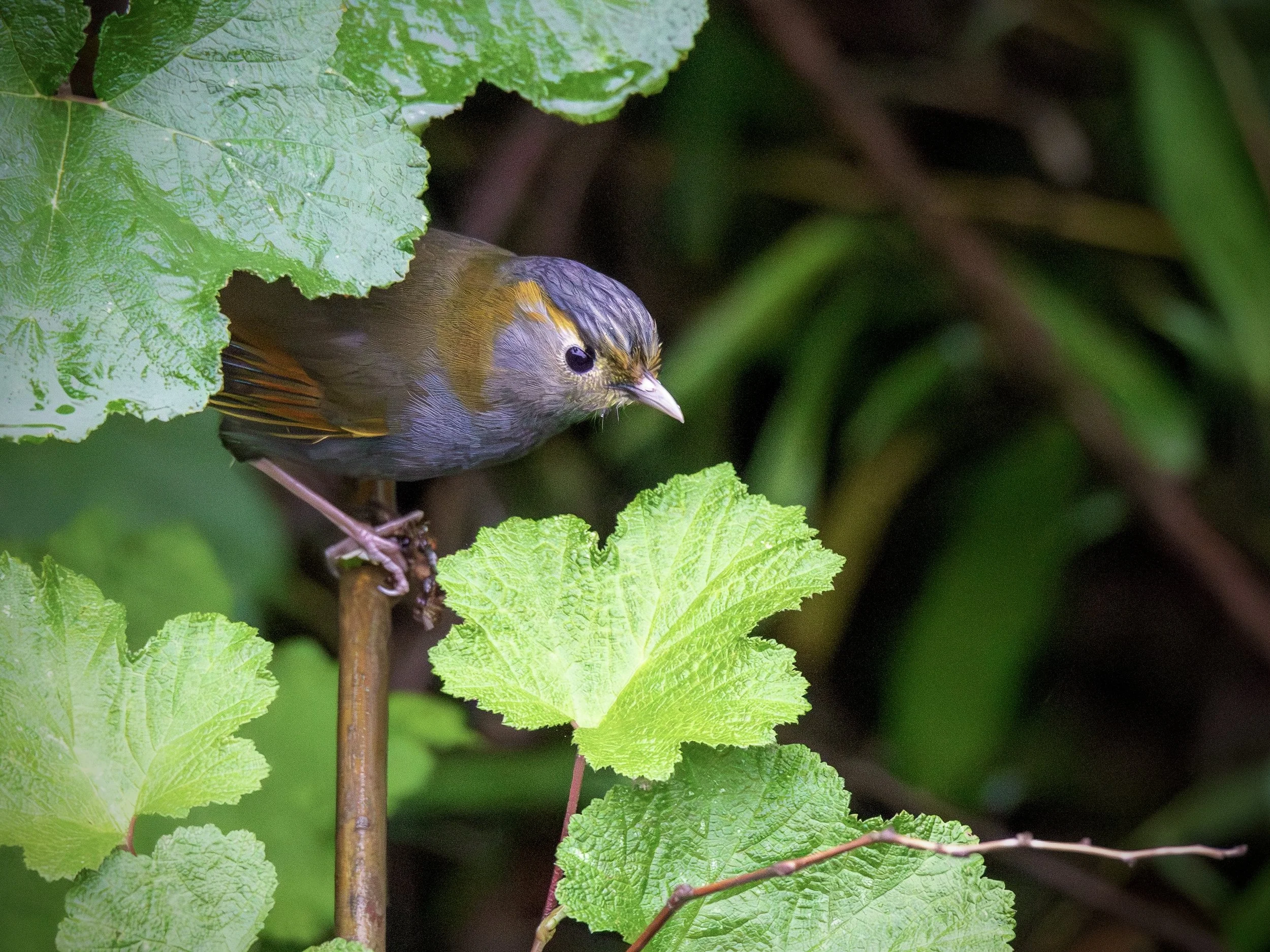
Emei Shan Liocichla (Liocichla omeiensis) - Endemic to China
Dates: May 29–31, 2023
Location: Wawu Mountain (https://ebird.org/hotspot/L15752301)
Introduction: Wawu Mountain is a table mountain in southwest China, with its summit at an elevation of about 2,830 meters. It is renowned for its parrotbill diversity, boasting eight species from the foothills to the summit, the most sought-after being Grey-hooded Parrotbill. The main birding areas are the mid‑slope and the summit, which feature humid evergreen broadleaf forest and fir‑bamboo mixed forest, respectively. Early to mid‑May is the best season for observing parrotbills. The site has comprehensive infrastructure yet sees few visitors, making it an exceptionally comfortable and convenient birding destination.
Guide: KJ Zhu
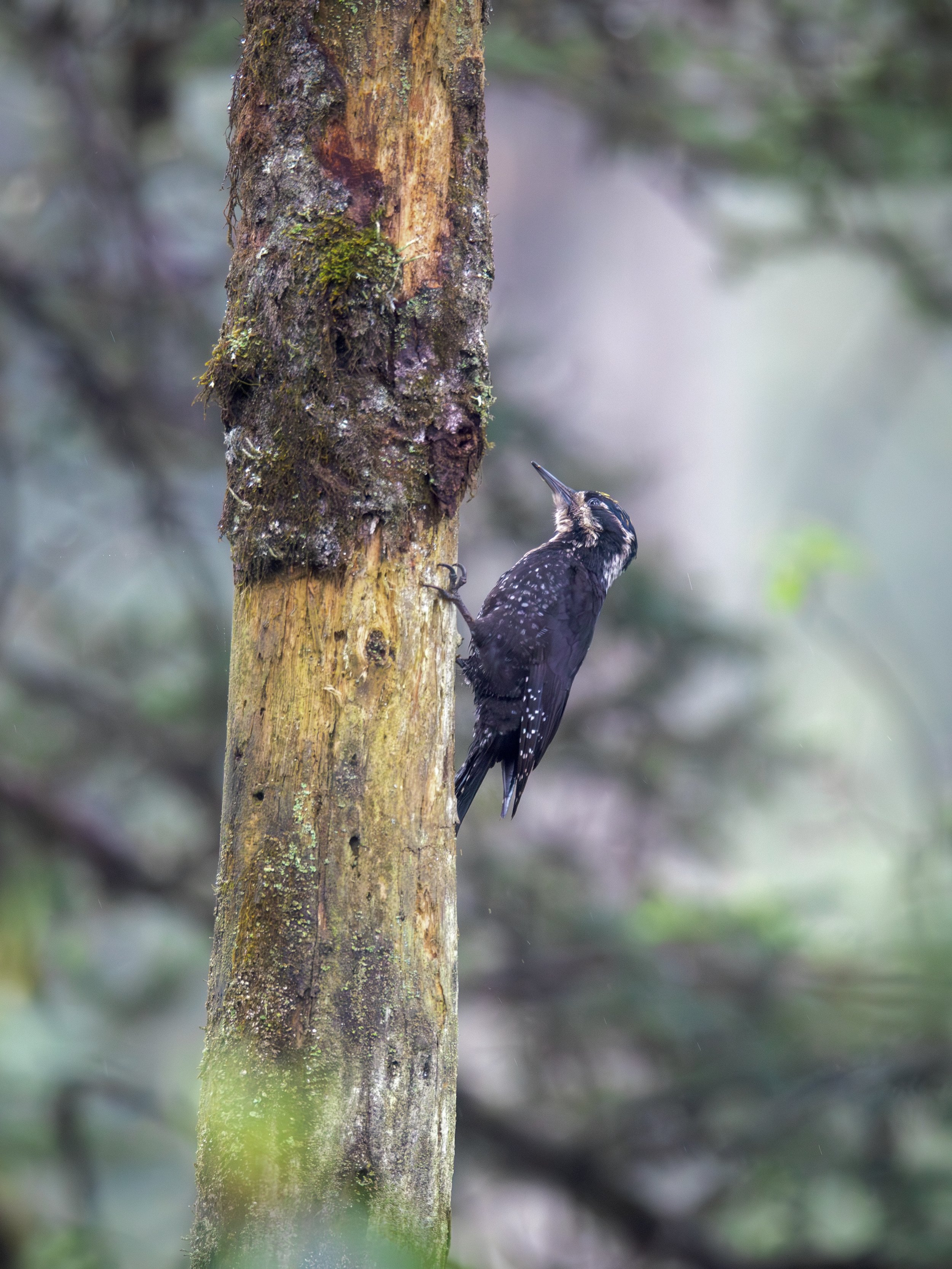
Eurasian Three-toed Woodpecker (Picoides tridactylus funebris), so called “Dark-bodied Woodpecker”, range restricted to southwestern China
D1: We departed from Chengdu in the morning and drove to Wawu Mountain. The drive took just over 3 hours, with the final stretch winding through some narrow and winding roads.
We had purchased a three‑day, two‑night birdwatching package in advance through the official mini-program. The package included park entry, unlimited cable car rides, and two nights‘ accommodation at Gongtong Mountain Villa.
Upon arrival, we parked our car at the free lot at the base. Entry is by ID card (a passport for foreigners, required in particular for the summit). You can go up by shuttle bus plus cable car, or by riding both cable car sections in turn (about 45 minutes); the cable cars run roughly 08:00–17:00. We took the first section, the Jinhuaqiao cableway, up to Gufoping on the mid‑slope, where Gongtong Mountain Villa sits.
Since we arrived rather late, we missed the most active birding hours. We familiarized ourselves with the cable car to the summit and the birding spots on the mid‑slope, readying ourselves for the next day‘s birding.
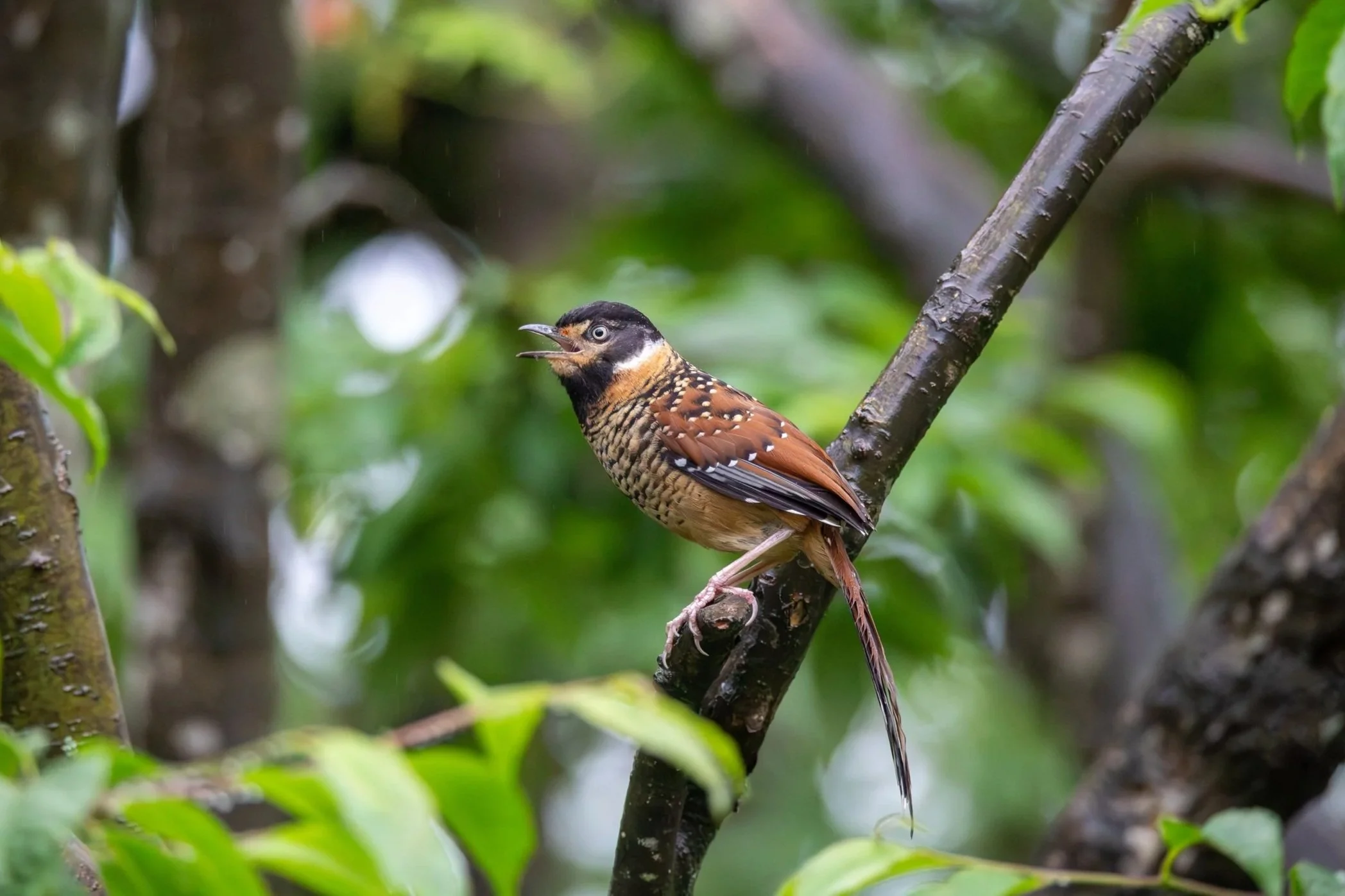
Spotted Laughingthrush (Ianthocincla ocellata)
D2: In the morning, we birded around Gongtong Mountain Villa. This area is a reliable site for Emei Shan Liocichla – and sure enough, after a group of Green‑backed Tits appeared, we spotted the liocichla. Many birders have seen Temminck’s Tragopan on the abandoned road next to the villa, but we were not so lucky. However, the road was filled with the songs of Large‑billed Leaf Warblers and Large Hawk‑Cuckoos, and we encountered Verditer Flycatchers and Spotted Laughingthrushes several times.
The Gufoping cable car (the second section) started operating at 8:00, and we went up to the summit as quickly as possible. Tourists tend to pour in after about 11:00, and loudspeakers play music, so the early morning is the quietest and best time for birding. It was very foggy that day, but the birds were still active. Elliot’s Laughingthrushes and Black‑faced Laughingthrushes were everywhere. We headed toward Yuanyang Pond and successively saw Great Parrotbill, Fulvous Parrotbill, and Three‑toed Parrotbill. All three were foraging in low bamboo thickets – truly the land of parrotbills.
Apart from parrotbills, I saw my much‑anticipated Darjeeling Woodpecker, and almost simultaneously spotted Eurasian Three‑toed Woodpecker.
This isn‘t the peak season for parrotbills, but the warblers were singing actively, with different species on the summit from those on the mid‑slope. It was easy to follow the songs to locate Spotted Bush Warblers, Aberrant Bush Warblers, Yellowish‑bellied Bush Warblers, and Grey‑hooded Fulvettas.
After spending the whole day on the summit, we returned to our hotel on the mid‑slope in the afternoon (we had lunch at the restaurant on the summit).
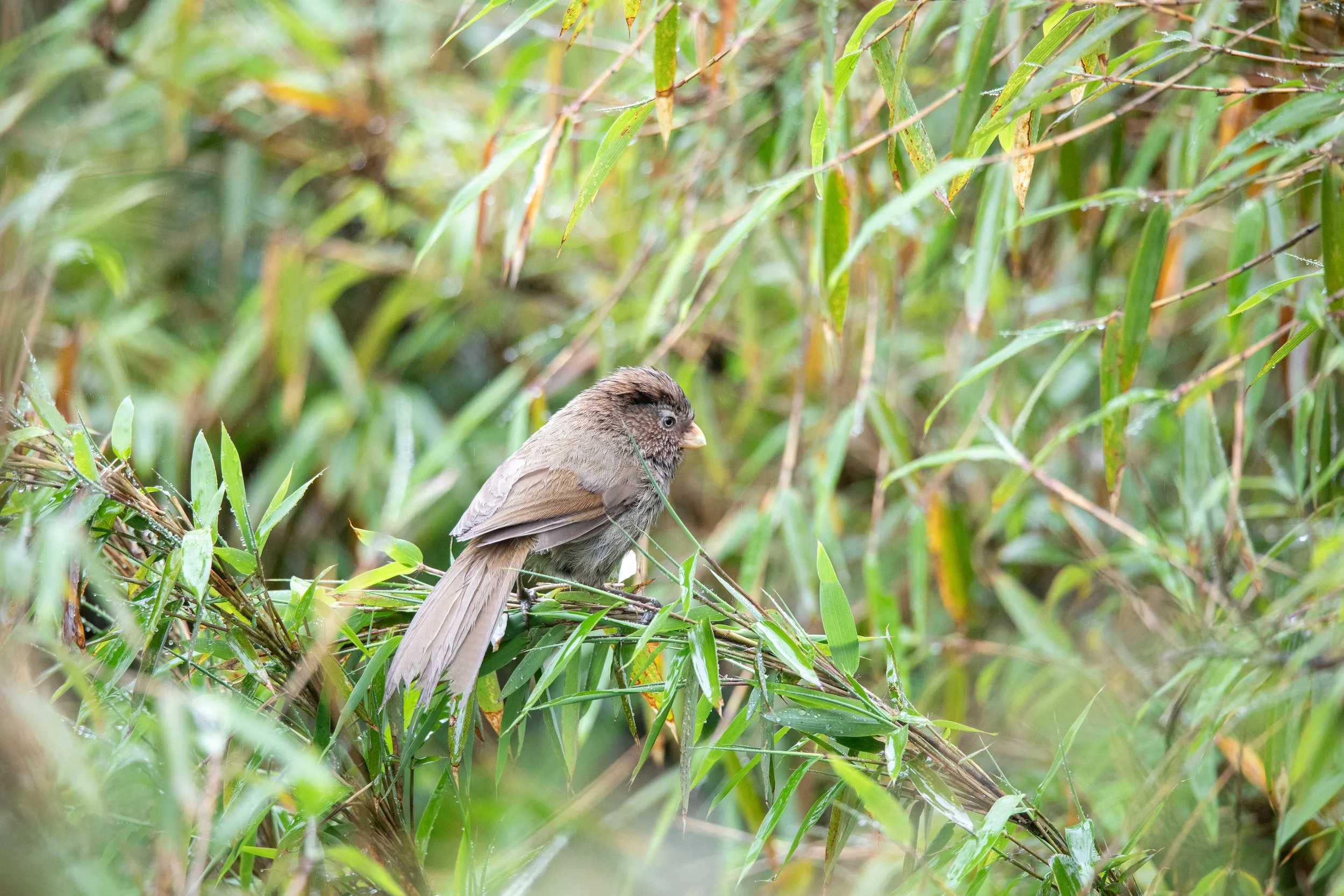
Brown Parrotbill (Paradoxornis unicolor)
D3: As on the previous day, we birded around the mid‑slope in the morning before the cable car started. Compared to yesterday, we also saw Golden Parrotbill and Red‑winged Laughingthrush – though the latter was rather shy. Once at the summit, the fog was still heavy. Not seeing a red panda was a considerable disappointment (they are most often encountered around the summit and on the descent of the lower Jinhuaqiao cable car, but the fog made mammal-watching hopeless), but we did spot an extra species: Brown Parrotbill.
We left Wawu Mountain at midday. Over the course of the three‑day, two‑night trip, we recorded 44 bird species. Considering the poor weather and the mid‑breeding season when birds are less active, this was a respectable result – and we saw most of the highlight species.
Life List
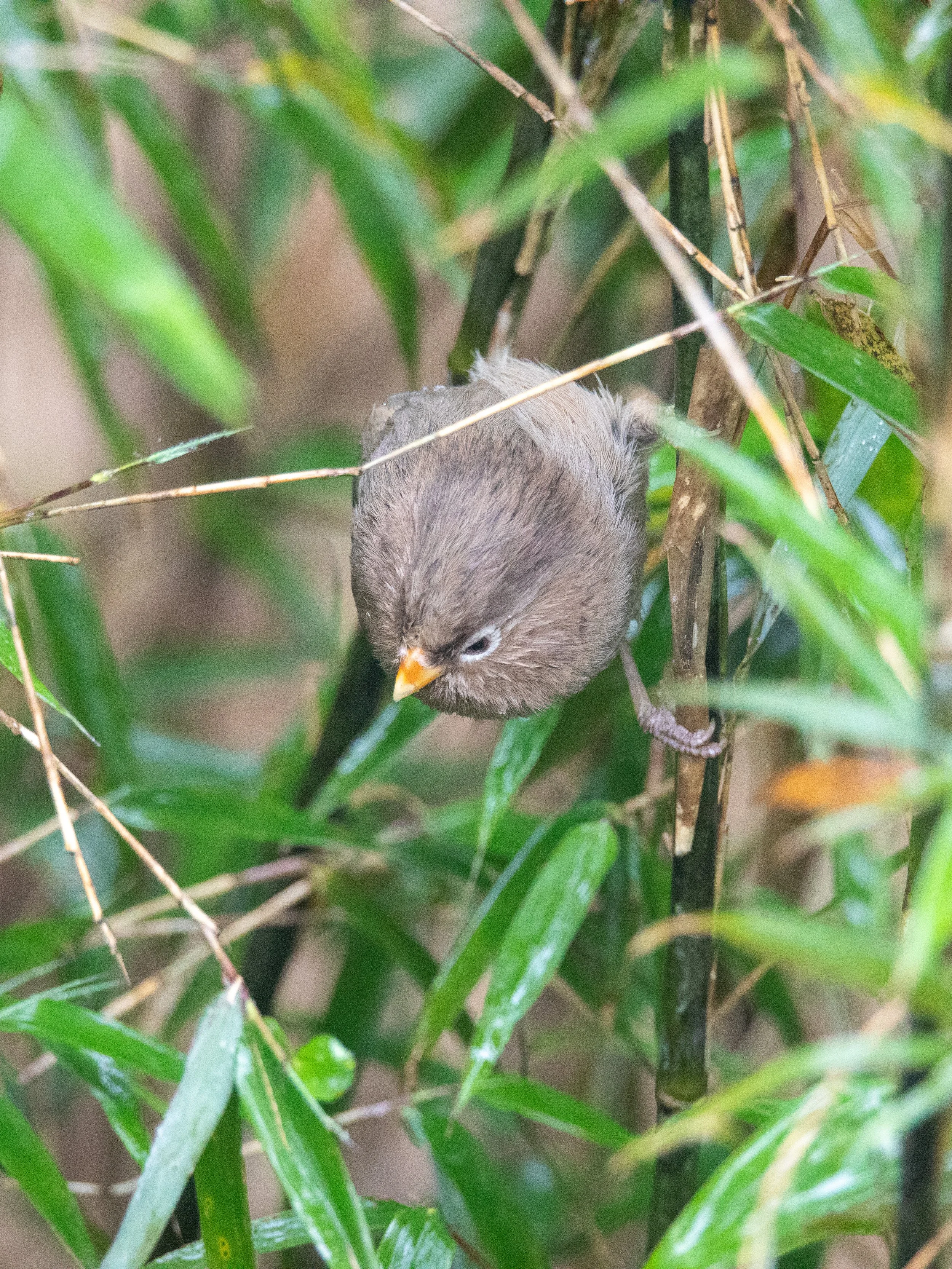
Three-toed Parrotbill (Paradoxornis paradoxus), endemic to China
Large Hawk-Cuckoo (Hierococcyx sparverioides)
Lesser Cuckoo (Cuculus poliocephalus)
Himalayan Cuckoo (Cuculus saturatus)
Eurasian Three-toed Woodpecker (Picoides tridactylus)
Darjeeling Woodpecker (Dendrocopos darjellensis)
Long-tailed Minivet (Pericrocotus ethologus)
Large-billed Crow (Corvus macrorhynchos)
Gray-headed Canary-Flycatcher (Culicicapa ceylonensis)
Rufous-vented Tit (Periparus rubidiventris)
Gray-crested Tit (Lophophanes dichrous)
Green-backed Tit (Parus monticolus)
Spotted Bush Warbler (Locustella thoracica)
Asian House-Martin (Delichon dasypus)
Bianchi's Warbler (Phylloscopus valentini)
Martens's Warbler (Phylloscopus omeiensis)
Two-barred Warbler (Phylloscopus plumbeitarsus)
Large-billed Leaf Warbler (Phylloscopus magnirostris)
Claudia's Leaf Warbler (Phylloscopus claudiae)
Brownish-flanked Bush Warbler (Horornis fortipes)
Yellowish-bellied Bush Warbler (Horornis acanthizoides)
Aberrant Bush Warbler (Horornis flavolivaceus)
Golden-breasted Fulvetta (Lioparus chrysotis)
Gray-hooded Fulvetta (Fulvetta cinereiceps)
Great Parrotbill (Paradoxornis aemodius)
Brown Parrotbill (Paradoxornis unicolor)
Three-toed Parrotbill (Paradoxornis paradoxus)
Fulvous Parrotbill (Suthora fulvifrons)
Golden Parrotbill (Suthora verreauxi)
White-collared Yuhina (Parayuhina diademata)
Black-faced Laughingthrush (Trochalopteron affine)
Elliot's Laughingthrush (Trochalopteron elliotii)
Red-winged Laughingthrush (Trochalopteron formosum)
Red-tailed Minla (Minla ignotincta)
Emei Shan Liocichla (Liocichla omeiensis)
Spotted Laughingthrush (Ianthocincla ocellata)
Chestnut Thrush (Turdus rubrocanus)
Dark-sided Flycatcher (Muscicapa sibirica)
Verditer Flycatcher (Eumyias thalassinus)
Himalayan Shortwing (Brachypteryx cruralis)
Golden Bush-Robin (Tarsiger chrysaeus)
Rufous-gorgeted Flycatcher (Ficedula strophiata)
White-capped Redstart (Phoenicurus leucocephalus)
Gray Wagtail (Motacilla cinerea)
White Wagtail (Motacilla alba)
